
















Pillow and Bolster: An Expat's Guide to Singapore's "Chou Chou"


You've moved to Singapore, or moved in with a Singaporean, and there's a long, firm, cylindrical pillow lying in the middle of the bed. It sits right where a second pillow should go. Your partner hugs it every night, calls it by a pet name, and looks a little wounded when you suggest it might live somewhere else.
That's the bolster, known affectionately as the chou chou. Before you tease your partner about it, though, consider this: that "childhood toy" is probably doing more for their spine than your single pillow is doing for yours.
Below, we'll cover where the habit comes from, why a pillow and bolster setup suits the body so well, and how to style one so your bed looks like a hotel suite rather than a hostel bunk. By the end, you'll know whether to join the bolster club or keep the jokes coming.
So, What Exactly Is a "Chou Chou"?
Ask a Singaporean about their bolster and you'll usually get a sheepish grin, then a story. Plenty of people have had one since they were in a cot and simply never stopped. The nickname chou chou is usually traced to the Mandarin 臭臭, meaning "smelly." It's a fond nod to the very particular scent a bolster picks up after years of nightly hugging.
The habit stretches well beyond Singapore. In Malay, the bolster is the bantal peluk, literally "hug pillow." In Indonesia, it's the guling. Europeans living in the Dutch East Indies picked up the same pillow during the colonial era and gave it a cheekier name: the "Dutch wife," a bed companion that never complained about the heat.
So your partner is far from the only adult who still sleeps with one. They're keeping up a habit that has been around this part of the world for centuries.
From Childhood Comfort to Grown-Up Sleep Tool
| The Childhood Chou Chou | The Grown-Up Bolster | |
|---|---|---|
| Why people use it | Comfort and habit | Spinal alignment and pressure relief |
| What it looks like | Flat, faded, a bit floppy | Firm, full, holds its shape |
| The cover | Whatever came with it in 1998 | A breathable case that matches the bed |
| The smell | Hence the name | Fresh, thanks to a weekly wash |
Keep the bolster. Just give it a grown-up upgrade.
Why One Pillow Is Never Enough: The Pillow and Bolster Division of Labour
Good sleep posture means keeping your spine in a fairly straight line for hours on end. A head pillow only looks after the top of it. Add a bolster and the work gets split: the pillow supports your neck and shoulders, while the bolster takes care of your hips, knees and lower back.
How much it helps depends on how you sleep.
Side Sleepers: Stopping the Twist
Sleep on your side with nothing between your legs and your top knee gradually sinks towards the mattress. That pulls your pelvis forward and puts a slow twist through your lower back, which is often where morning stiffness comes from. A firm bolster between your knees keeps your hips stacked and your spine straight. Physiotherapists regularly suggest a pillow between the knees for side sleepers. Singaporeans just got there first, with a longer pillow.
Back Sleepers: Easing the Arch
Lie flat on your back and you'll usually feel a small gap between your lower back and the mattress. Hold that position all night and your lower back can wake up tired and tight. Put a bolster under your knees and your pelvis tilts slightly, letting your lower back settle closer to the mattress. Few people outside Asia think to try it, but it's one of the most useful ways to use a bolster.
Stomach Sleepers: The Transition Tool
Stomach sleeping is tough on the neck, since your head has to turn hard to one side so you can breathe. If you're trying to break the habit, a bolster gives you a middle ground. Roll most of the way onto your side, hug the bolster, and rest one arm and one leg over it. You keep the pressure against your chest that stomach sleepers find so comforting, and your neck gets a much easier night.
Find Your Position
| How You Sleep | Where the Bolster Goes | What It Helps With |
|---|---|---|
| Side | Between the knees, hugged to the chest | Keeps hips stacked and stops the lower back twisting |
| Back | Under the knees | Eases the arch and pressure in the lower back |
| Stomach | Along the front, with one arm and leg over it | Rolls you into a gentler, side-leaning position |
A bolster can make sleep more comfortable, but it isn't a treatment. If you have ongoing back or neck pain, talk to a doctor or physiotherapist about what suits your body.
The Hug Problem: Why the Fabric Matters as Much as the Filling
A bolster changes how much of you touches your bedding. Instead of resting your cheek on a small rectangle of fabric, you're wrapping your arms and legs around a long cushion all night. With Singapore's humidity regularly above 80%, that full-body hug holds heat. Good posture won't count for much if you wake up sticky at 3am, even with the aircon on.
The more of your body touches your bedding, the more the fabric decides whether you sleep cool or wake up sticky.
A lot of newcomers assume a higher thread count means a thicker, hotter sheet. With tightly woven regular cotton, they have a point. In practice, the fibre affects how cool you sleep far more than the number on the packet.
This is why TENCEL™ Lyocell is so popular in the tropics. It's a fibre made from wood pulp, and it absorbs moisture well and draws it away from your skin, so the surface feels drier and cooler through the night. It's also super soft, which you'll appreciate when you're holding it for eight hours. For a closer look, read our piece on whether Tencel bed sheets are actually worth it in Singapore.
A quick note on numbers. Charles Millen measures thread count per 10 sq cm, as many Asian brands do, rather than per square inch like most US sites. Our 100% TENCEL™ Lyocell bed linens come in 900 and 1200 thread count per 10 sq cm, a dense, smooth weave that still breathes. Our guide to bed sheet thread count explains the difference.
The part your new bolster will appreciate
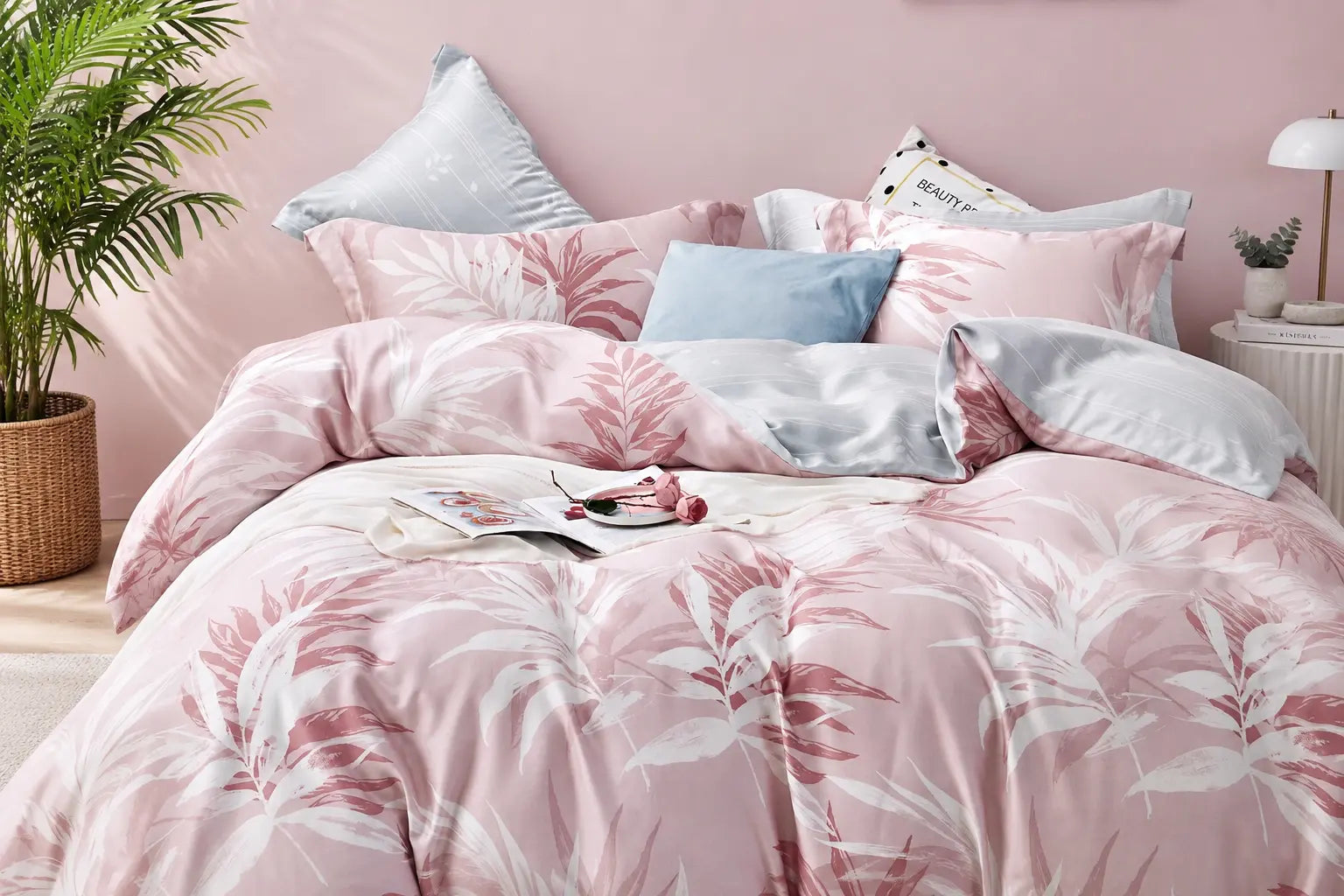
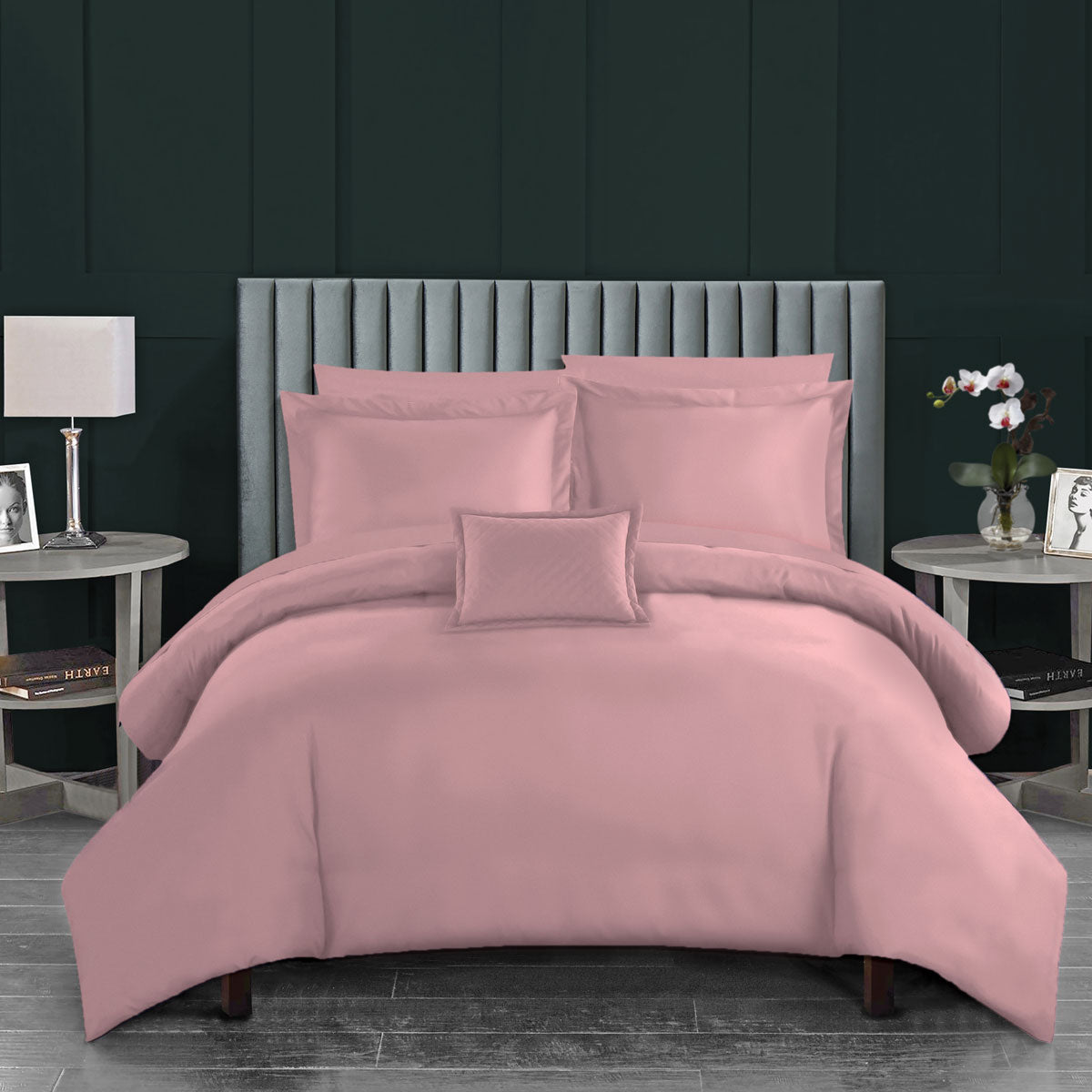
Every Deluxe Fitted Sheet Set and Deluxe Bed Set in our Tencel range, including the Suzanne Sobelle Bloomsbury collection, comes with a matching 37 × 107 cm bolster case alongside the pillowcases. The set in our photos is the Bloomsbury Luxury Melia (Soft Green), in 1200 thread count Tencel with a soft magnolia print. You won't have to hunt for a case that fits, and there's no odd cover spoiling the bed. Add a firm, well-filled bolster insert that keeps its shape and you've got a cool, supportive setup from head to toe.

The Hygiene Bit Nobody Tells You
A bolster gets far more contact than an ordinary pillow. Arms, legs, chest and often your face press into it for seven or eight hours a night. In humid weather, sweat and skin oils soak into the case and dead skin cells collect on the surface, which is exactly the warm, damp setting dust mites thrive in.
If you're prone to allergies, sensitive skin or breakouts, a case that's gone too long between washes can affect how you feel in the morning. The fabric against your face should be clean and breathable, so it's worth keeping on top of.
A simple routine:
- Pillow and bolster cases: wash weekly, or more often if you sweat a lot at night.
- Fitted sheets: weekly, in the same load as the cases.
- Pillow and bolster inserts: refresh or replace every one to two years, or sooner if they go flat or lumpy.
Weekly washing only feels like a chore when you own one set. Keep a spare in the cupboard and you can strip the bed, put fresh cases straight on, and let the laundry dry in its own time. For Tencel, follow the care label: a gentle cycle in cold or warm water (below 30°C), a mild detergent, and no soaking or bleach will keep it soft for longer.
How to Style a Bolster Like a Five-Star Hotel
Nothing makes a nicely made bed look messy faster than a bolster tossed on top of the covers. Most newcomers do exactly that, and the room ends up looking like a student flat. Hotels figured out how to handle this long ago, and their approach is easy to copy.
Start with a matching set. A mismatched bolster cover is the first thing people notice. When the bolster case, pillowcases and sheets come from the same set, the bolster looks like part of the design instead of an extra. That's where having the case included in the set really helps.
Then follow this stacking order:
- The base: lay your sleeping pillows flat against the headboard for a neat, low foundation.
- The height: stand any decorative cushions upright in front of them to add structure.
- The bolster: you have two options. Lay it across the foot of the bed, where it works much like a bed runner. Or tuck it horizontally behind the upright cushions, where it's hidden during the day and still within reach at night.
Neutral and soft-toned Tencel sets work well with both, since the bolster blends into the bed rather than standing out. For something light to sleep under in Singapore's heat, browse our comforters, or find out what Singaporeans actually sleep under.

So, Should You Join the Bolster Club?
Still undecided, and still guarding your half of the mattress? Here's a quick way to decide.
- Give it a go if you sleep on your side, wake up with a stiff lower back, or already end up hugging a spare pillow or the duvet.
- Try it under your knees if you sleep on your back and your lower back feels tired in the morning.
- Maybe skip it if your bed is already tight on space and you sleep flat on your back without any aches. Not everyone needs one.
The cheapest test is to borrow your partner's for a few nights, if they'll let you. If you sleep better, it's probably time to get your own and upgrade both at once.
Frequently Asked Questions
Do I really need both a pillow and a bolster?
Not strictly, but they do different jobs. The pillow supports your head and neck, and the bolster supports your hips, knees and lower back. For side sleepers especially, using both keeps the spine much straighter than a pillow alone.
What size is a standard bolster case in Singapore?
It varies by brand. The bolster cases in Charles Millen Deluxe sets measure 37 × 107 cm, so measure your insert before buying a case on its own.
Why do Singaporeans call a bolster a "chou chou"?
The usual explanation is that it comes from the Mandarin 臭臭, meaning "smelly," after the scent a bolster picks up over years of hugging. It's said with affection, not as an insult.
Is Tencel cooler than cotton for a bolster case?
In a humid climate, usually yes. TENCEL™ Lyocell absorbs and releases moisture well, so it tends to feel drier and cooler against your skin. That makes a real difference with something you hold all night.
How often should I wash my bolster case?
Once a week is a good rule, or more often if you sweat at night or have sensitive skin. A spare case makes that much easier.
Your New Sleep Setup, Sorted
The bolster might look like a leftover from childhood, but it's one of the more sensible sleep habits in Southeast Asia. Pair the right pillow and bolster with a cool, breathable fabric and you get better support, a cleaner bed and a room that still looks put together during the day. Adopting a local habit and sleeping in five-star comfort turn out to be the same thing.
And if your partner says "I told you so" the first time you reach for the bolster, let them have that one.
Ready to set up your own? Explore the Charles Millen bed linen collections and pick a Tencel set, bolster case included, that turns the local chou chou into your favourite part of the bed.
Also in Blog